Maintenance
Part of Account opening: the questions that matter
Account opening comparison: Four routes compared on risk
This account opening comparison weighs branch, remote, intermediary, and credit union routes by deposit holder, insurance, escalation, and access risk.
This account opening comparison covers four ways a business account opens, and each route changes who verifies you, who holds the deposit, who you reach when a file stalls, and what happens if one party changes.
Compare routes on those four axes, not on brand. The route explains most of what the experience will feel like.
What to take away
- A branch at a chartered bank such as Chase, Wells Fargo, or Bank of America offers face-to-face contact with the named bank.
- Remote direct means applying online through a provider with a disclosed deposit-taking bank, such as Mercury through Evolve Bank and Trust or Bluevine through Coastal Community Bank.
- An intermediary account program adds a technology company between you and the deposit-taking bank; the account agreement and disclosures identify the bank or banks for that product.
- A credit union such as Navy Federal or Alliant opens the account only after you establish membership eligibility.
- The key risk distinction is whether a separate platform stands between you and the deposit-taking institution; check the account agreement to confirm the relationship.
The four routes, by name
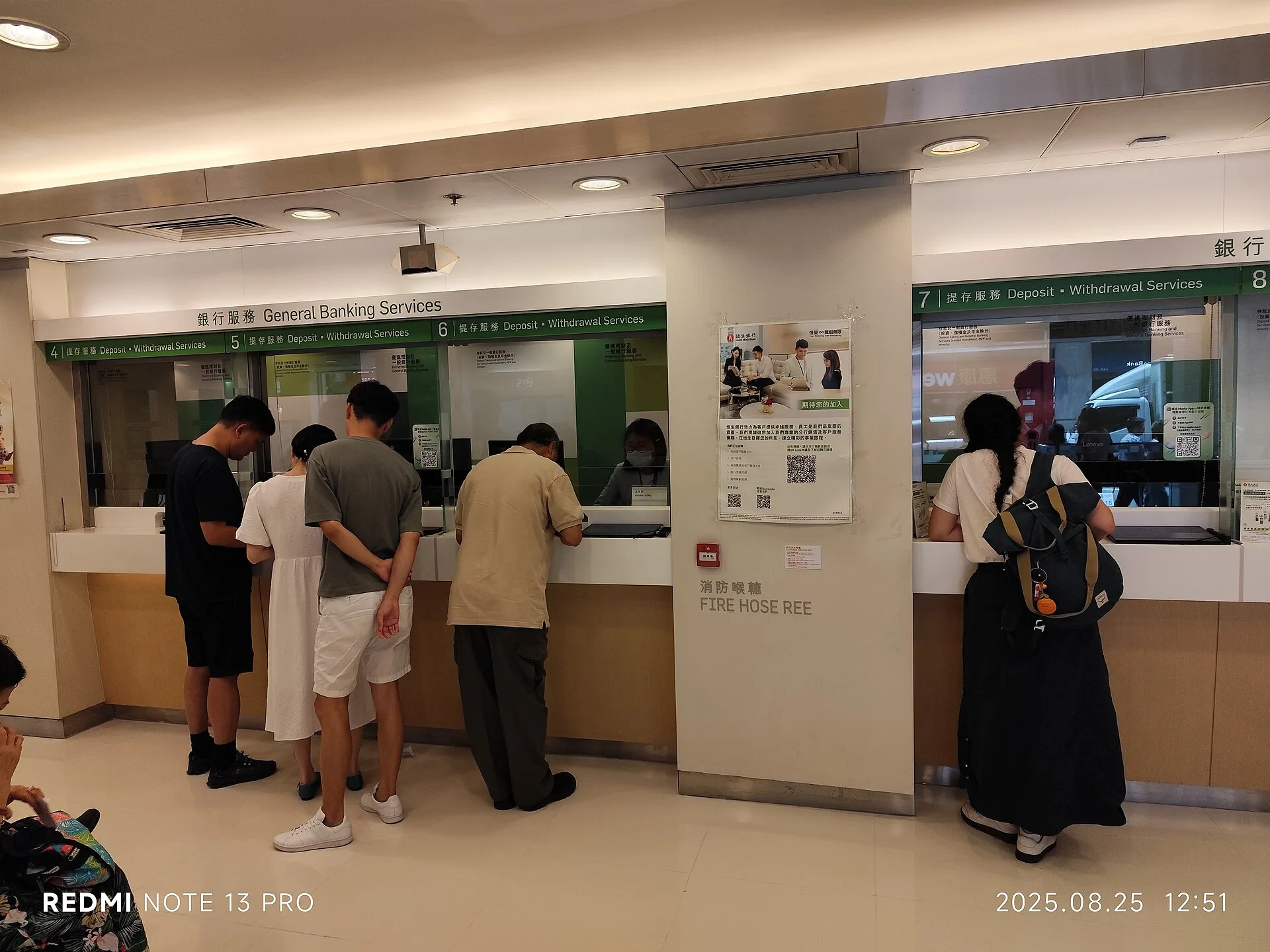
In person at a staffed branch. Chase, Wells Fargo, Bank of America, and most regional banks open business accounts at a counter. Staff can review documents and identification with you, and you can ask questions face to face.
Scheduling a visit takes time, but speaking with staff can help resolve an application issue that an upload form cannot handle. A branch visit does not prevent later account reviews or holds.
Remote, direct with the institution. You apply online to the bank that itself holds the deposit. Axos Bank is a chartered bank that offers online business-account opening.
Verification is uploads and electronic checks. Clean documents clear quickly. Anything else falls into a manual queue, and queue quality varies more than any front page admits.
Through a technology company that is not itself a bank. This type of account uses a platform to open and service the account, while deposits are held at one or more partner banks identified in the product's account agreement and disclosures. Mercury, Bluevine, and Novo are fintech platforms, not the deposit-taking banks for the accounts described here: Mercury runs its accounts through Evolve Bank and Trust, Bluevine through Coastal Community Bank, and Novo through Middlesex Federal Savings. The holding bank can depend on the specific product and terms, so do not infer it from the platform's brand.
An intermediary can make an account convenient to open and use, but it adds a counterparty between you and the deposit-taking bank. Complaints, account access, and changes to the partnership can depend on both the platform terms and the bank arrangement.
A credit union opens the account, and joining is a real step before the application, not a formality inside it. Navy Federal requires military affiliation; Alliant requires a qualifying organization or a donation.
Membership eligibility is an extra step, and the institution may ask for evidence that you qualify. The mechanics are set out under credit unions.
The axis that matters most
Ask one question of every route: who holds the deposit, and what is my legal relationship with them?
At a branch and at a credit union, the named institution is the deposit-taker. In a direct online arrangement, the named bank is the deposit-taker; in an intermediary arrangement, read the account agreement and disclosures to identify the deposit-taking bank and your legal relationship. An app or provider name alone does not establish either.
This is not automatically better or worse, but it changes who you contact and whose service interruption or insolvency may matter. Deposit protection depends on the actual deposit-taking institution, account ownership, balance, and applicable records, while a partnership change can affect access under the account terms.
Coverage exists at insured institutions with limits and conditions that depend on titling and structure, and the position is published by the FDIC rather than by whoever sells the account. Whether a given institution is insured at all is checkable in the regulator's own institution directory.
If a provider will not answer the holding question plainly in writing, that is the answer.
Routes compared by risk
In person
- Who verifies you
- Staff, in the room
- Who holds the deposit
- The institution
- Escalation
- A named person
- Extra step before applying
- Appointment
- Handles an awkward document
- Best
- Speed to open
- Slowest
Remote, direct
- Who verifies you
- Automated checks, then a queue
- Who holds the deposit
- The institution
- Escalation
- A queue, sometimes a phone line
- Extra step before applying
- None
- Handles an awkward document
- Mixed
- Speed to open
- Fast
Through an intermediary
- Who verifies you
- The intermediary's process
- Who holds the deposit
- Partner institutions behind it
- Escalation
- Two parties, one of whom is not the bank
- Extra step before applying
- None
- Handles an awkward document
- Weakest
- Speed to open
- Fastest
Membership institution
- Who verifies you
- Staff or remote, after joining
- Who holds the deposit
- The credit union
- Escalation
- Usually a named person
- Extra step before applying
- Establishing eligibility
- Handles an awkward document
- Good
- Speed to open
- Moderate
Read the table by column, then compare the route-specific insurance, counterparty, and access risks below. No route is automatically safest for every business or balance.
- In-person branch:The deposit is at the named bank, so FDIC coverage depends on that bank being insured and on the standard coverage limits. You have face-to-face escalation, but a branch visit does not eliminate verification reviews or holds.
- Remote direct:If the account relationship is directly with the disclosed insured bank, the same FDIC limits apply without an added platform counterparty. The tradeoff is that resolving an upload or verification issue may depend on remote support; check the agreement to confirm who holds the deposit.
- Intermediary:A technology platform adds a separate counterparty, so platform access and bank deposit protection are distinct issues. Pass-through FDIC coverage depends on the account structure and records, and a partner change can affect access under the account terms.
- Credit union:The account is held at the credit union, and federal NCUA share insurance applies only if it is federally insured and within the coverage rules. Membership eligibility is an additional barrier, while balances above applicable limits are not automatically insured.
All four routes can involve account reviews or holds. The difference is where you escalate, which institution holds the funds, and whether a platform adds another party to the relationship.
Four routes compared by mechanism
In person
- Who verifies you
- Staff in room
- Who holds deposit
- The institution
- Escalation
- Named person
- Extra step
- Appointment
- Awkward document
- Best
- Speed to open
- Slowest
Remote, direct
- Who verifies you
- Checks then queue
- Who holds deposit
- The institution
- Escalation
- Queue or phone
- Extra step
- None
- Awkward document
- Mixed
- Speed to open
- Fast
Intermediary
- Who verifies you
- Intermediary process
- Who holds deposit
- Partners behind it
- Escalation
- Two parties
- Extra step
- None
- Awkward document
- Weakest
- Speed to open
- Fastest
Membership
- Who verifies you
- After joining
- Who holds deposit
- The credit union
- Escalation
- Named person
- Extra step
- Eligibility
- Awkward document
- Good
- Speed to open
- Moderate
What the route does not decide
Route and pricing are independent. Any of the four can be cheap or expensive for your activity, because pricing follows the fee schedule and your volumes, not the channel. Price them separately, using the arithmetic on what an opening actually costs.
Route and acceptance are independent too. Industry policy is set at institution level. A remote route will not accept a business the same institution would decline in person, and no channel routes around a standing policy.
Choosing by your awkward cases
Ordinary weeks look the same on every route. Choose on the exceptions:
Choose on your awkward cases
- Handle currency and coin?
- Need certified funds or signature guarantee?
- Ownership through entities or overseas?
- Borrowing within a couple of years?
- How long without access?
Specific failure modes include a manual verification queue or account hold, a platform service interruption, and a partnership change that affects access. Deposit-insurance eligibility is separate from access continuity. Further failure modes are cataloged under where openings go wrong.
Running two routes on purpose
The routes are not exclusive, and the strongest arrangement for most businesses uses two of them: one relationship built for daily convenience, one built to still be there on a bad day, at an institution with a different profile. Keep the second live rather than dormant, with a small balance and a recurring payment through it.
Depending on the institution and business, the opening packet may include the institution's account application, government-issued ID for owners or signers, EIN confirmation (or an SSN where applicable), formation documents such as articles of organization, and ownership information. Requirements vary, so check the institution's instructions and disclosures.
Common questions
Is a remote route more likely to be declined?
Not by policy. It is more likely to stall, because automated verification either passes or falls into a queue, and nobody is in the room to resolve an edge case on the spot. Businesses with clean, consistent documents rarely notice the difference.
Does going through an intermediary put my money at more risk?
An intermediary adds a party between you and the deposit, which is a structural difference rather than a verdict. Ask which bank holds the balance, whether the funds are deposits, and how coverage is calculated when funds are spread across banks. Keep the written answer with your account records.
Can I switch routes later without switching institutions?
Sometimes, within one institution that offers both a branch and a remote channel. Across an intermediary arrangement, usually not, because the interface and the underlying account are not separable from the outside.
Which route should a business with no unusual needs pick?
Whichever is quickest, then add a second relationship on a different route within the year. A business with no unusual needs today is describing this year, and the second relationship protects the years after it. How charges differ once you run two accounts is on the banking fees page.